Election War Room Setup: Team, Tools and Daily Dashboards (2027 Checklist)
An election war room turns thousands of field reports, calls and messages into a few decisions a day. Here is how to staff it, what to track by booth, and the rules it has to work within.
The short answer
An election war room is the campaign’s decision centre. It collects what is happening in every booth — voter issues, sentiment, volunteer activity, opponent moves — turns it into a short daily picture, and assigns actions. Set it up with six roles, one shared dashboard, a fixed daily rhythm and a compliance owner, at least eight to ten weeks before polling. Nutaan’s Chunav Ki AI Intelligence is built for this.
The five jobs a war room does
Listen: collect issues and sentiment from calls, field reports and social media. Map: tie everything to booth, ward and segment. Decide: choose the day’s priorities. Dispatch: send tasks to booth in-charges and volunteers, and check they were done. Report: give the candidate a one-page picture every evening.
Team structure
| Role | Owns | Daily output |
|---|---|---|
| War-room head | Priorities and escalation | Evening brief to the candidate |
| Data analyst | Booth-level numbers and trends | Morning dashboard update |
| Calling lead | Voter and supporter calls, scripts, schedules | Call outcomes by booth |
| Field coordinator | Booth in-charges and volunteers | Task completion report |
| Social and media | Narrative, rebuttals, monitoring | Issues trending today |
| Compliance owner | MCC, calling rules, approvals | Sign-off on every script and campaign |
The tools
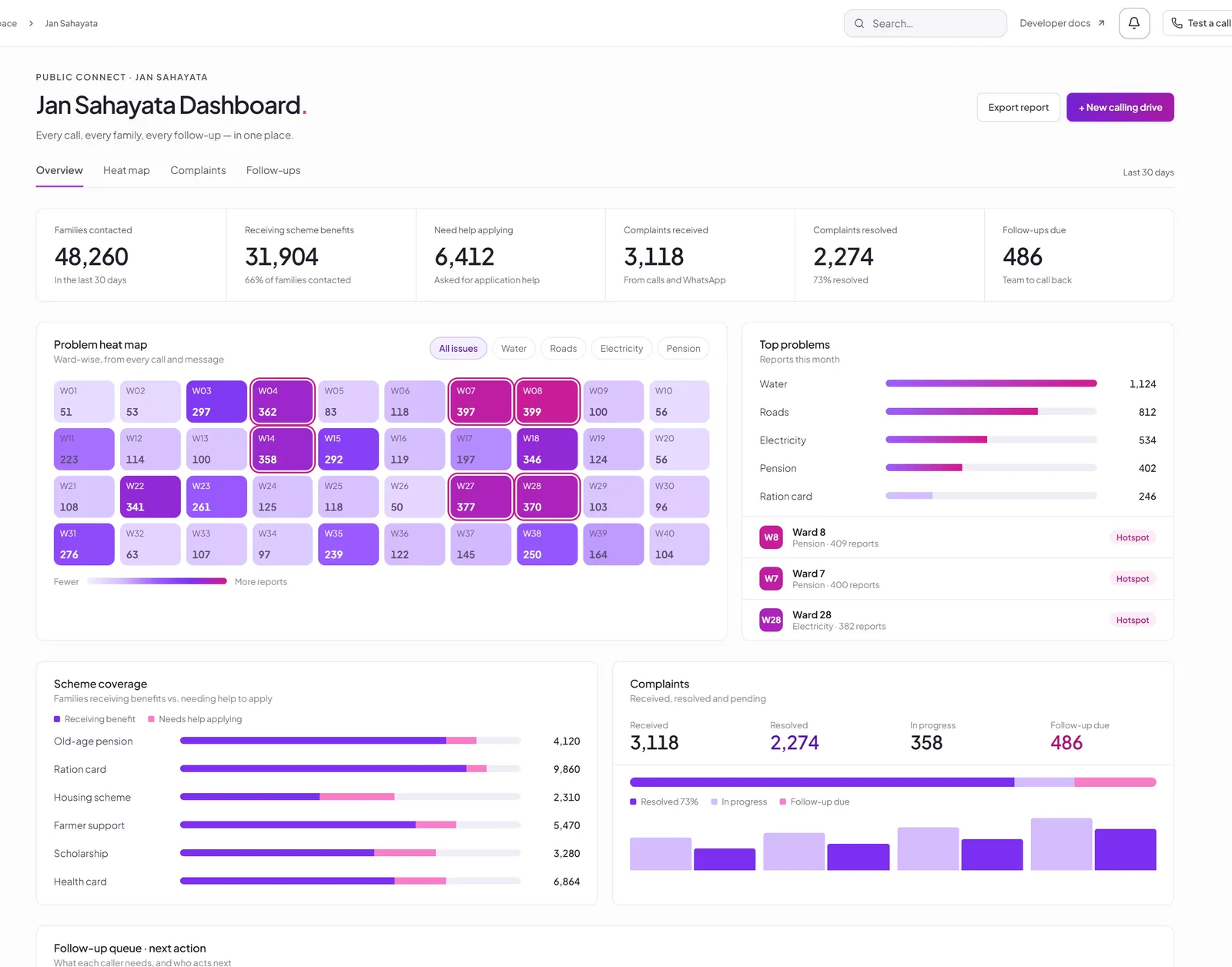
Voter and booth data (from lawful sources). Two-way calling that records issues against booths — see election voice calls. WhatsApp for volunteers and supporters. A shared dashboard that rolls everything up from booth to constituency. A task tracker for field work. Keep the tool count small; a war room that lives in ten spreadsheets cannot make decisions quickly.
The daily rhythm
| Time | What happens |
|---|---|
| 7:00 | Overnight data loaded; dashboard refreshed |
| 8:30 | Stand-up: top three issues and booths that need attention |
| 9:00–19:00 | Calls, field tasks, rebuttals; mid-day check at 14:00 |
| 19:30 | Task completion and call outcomes reviewed |
| 21:00 | One-page brief to the candidate; next day’s priorities set |
Countdown to polling day
60 days: team hired, data sources agreed, dashboard live, compliance owner named. 30 days: issue discovery calls across all booths; volunteer recruitment. 15 days: focus on swing booths; rally and event invitations. 7 days: confirm booth agents and logistics. Final 48 hours: campaign calls stop for the silence period; the war room switches to booth readiness and logistics only.
What to track by booth
Top three issues and how they are changing. Supporter, undecided and opposed shares from calls and field reports. Volunteer coverage. Tasks assigned versus done. Grievances logged and closed. Turnout risk.
Compliance in the war room
Campaign calling must follow the Election Commission of India’s Model Code of Conduct and its current advisories, including those on AI-generated content; must stop during the silence period before polling (48 hours, under Section 126 of the Representation of the People Act, 1951); must use the telecom routes and registrations that apply; must identify the caller and campaign honestly; must honour opt-outs and do-not-disturb preferences; and must disclose recording. Never synthesise a real person’s voice without their consent. Have your legal team approve scripts and the calling calendar.
Mistakes campaigns make
Too many dashboards and no single number everyone trusts. Calls that only broadcast and never ask. Data that never reaches the booth in-charge. No owner for compliance. Starting four weeks before polling instead of eight to ten.
Frequently asked questions
What is an election war room?
The campaign’s decision centre: it collects booth-level information, sets daily priorities, dispatches tasks and briefs the candidate.
How many people does an election war room need?
Six core roles cover most assembly campaigns; larger campaigns add analysts and callers per region.
Can AI calls be used in an election campaign?
Yes, within the Model Code of Conduct, telecom rules and ECI advisories, and never during the silence period before polling.
When should the war room be set up?
Eight to ten weeks before polling, so issue discovery and volunteer recruitment finish before the final month.
Written by the Nutaan team — we build and operate the AI calling and chat platform described here, running production voice and chat workloads for businesses across retail, healthcare, real estate, education and hospitality. Updated 19 November 2026. Pricing figures reference Nutaan's published rates; costs on other platforms vary. Questions or corrections: avishek@nutaan.com.